Restaurant online ordering costs either 15%–30% of every delivery order or $229–$499 a month flat, and the gap between those two models is the single largest controllable line item in most takeout operations. On $10,000 a month in online sales at a $35 average order, the same revenue costs $30,000 a year through DoorDash's 25% Plus plan or about $10,497 a year on a direct site with a flat-fee platform — a difference of $19,503. The break-even is much lower than operators assume: roughly $2,349 a month in online sales.
Almost every guide ranking for this question is published by a company that sells an online ordering platform, which is why the numbers in them are vague and the conclusion is always the same. We did it the RestroScout way instead: on August 4, 2026 we read the published fees straight off the merchant pricing pages for DoorDash, Uber Eats, Owner, and ChowNow, took Square's published online processing rate as the direct-channel benchmark, and then ran the arithmetic those pages don't show. Where a vendor publishes nothing — Toast and TouchBistro both decline to price online ordering publicly, and Grubhub's pricing page refused our fetches — we say so instead of borrowing someone else's number.
If you're pricing the rest of your stack at the same time, our restaurant POS system cost guide covers software, hardware, and card-present processing with the same dated-source treatment.
The two pricing models
Every online ordering quote is one of two shapes, and they fail in opposite directions.
- Marketplace commission. You pay a percentage of each order's subtotal. No subscription, no setup fee, and — on DoorDash at least — no separate card processing fee. Cost scales perfectly with volume, which is comfortable at low volume and brutal at high volume.
- Flat-fee direct ordering. You pay a monthly subscription for ordering software on your own website, plus your own card processing on each order. Cost is fixed, which is painful at low volume and cheap at high volume.
The marketplaces sell demand. The direct platforms sell margin. Confusing the two is how restaurants end up paying 30% commission on repeat customers who already knew their phone number.
Marketplace commission rates, verified
Read from each company's merchant pricing page on August 4, 2026:
DoorDash publishes three plans, all commission-only: Basic 15%, Plus 25%, Premier 30% on delivery, with 6% on pickup across all three. Basic includes a 0% intro rate for 7 days; Plus and Premier get 30 days. Premier adds an order guarantee — accept at least 20 orders in a month or DoorDash refunds that month's commission.
Uber Eats publishes four: Lite 20%, Plus 25%, Premium 30% marketplace fee on delivery, and 15% if you handle self-delivery. Pickup is 7% — but only "with validated in-store pricing." Without that validation the page states pickup rises to 10%. Uber also lists Uber Direct at "starts at $7.99 per delivery" for orders from your own channels, and a Webshop priced at 2.5% + $0.29 per order.
That Webshop line is worth staring at. It is priced like a payment rate, not a commission — which tells you roughly what the delivery marketplaces think order-taking is actually worth once you strip out demand generation.
What direct platforms charge
Owner.com publishes two plans, month-to-month with no long-term contract: Flexible at $249/month plus a 5% restaurant fee per order, and Flat Rate at $499/month with no additional restaurant fees. Owner's page recommends Flat Rate for "restaurants at $5k+/mo in online sales" — and their math is right. The two plans cross over at exactly $5,000: $249 + 5% × $5,000 = $499.
ChowNow publishes three, cheaper when billed annually: Launch $229, Grow $319, Elevate $409 per month annually, or $249 / $349 / $449 billed monthly. All are labelled "starting at."
DoorDash Online Ordering — the direct-site product, distinct from the marketplace — is the outlier: 0% commission and no monthly fee, with the page stating "the only charge is payment processing fees like the ones you pay on dine-in orders." It was promoting a further "free for 2 months" offer on the day we checked. DoorDash does not publish the processing rate itself, which is the one number that matters on an otherwise-free product.
Toast and TouchBistro both market commission-free ordering with "one flat fee per order" for delivery, and neither publishes the subscription price or the flat fee. Both are quote-only. We are not going to invent a number for either.
Grubhub's merchant pricing page returned an HTTP 403 to our fetches on August 4, and its consumer domain served a country-block page. We have no verified Grubhub figures and print none — if you're evaluating Grubhub, get the rate card in writing.
The same $10,000 a month, priced on every channel
Assume $10,000/month in online sales at a $35 average order — 285.7 orders a month. For direct channels we add card processing at Square's published online rate of 2.9% + 30¢, which works out to $290.00 + $85.71 = $375.71/month. Marketplace commissions include processing, so nothing is added to those.
| Channel | Per month | Per year |
|---|---|---|
| DoorDash Premier (30%) | $3,000.00 | $36,000.00 |
| Uber Eats Premium (30%) | $3,000.00 | $36,000.00 |
| DoorDash Plus (25%) | $2,500.00 | $30,000.00 |
| Uber Eats Lite (20%) | $2,000.00 | $24,000.00 |
| DoorDash Basic (15%) | $1,500.00 | $18,000.00 |
| Uber Eats self-delivery (15%) | $1,500.00 | $18,000.00 |
| Direct — Owner Flexible ($249 + 5%) | $1,124.71 | $13,496.57 |
| Direct — Owner Flat Rate ($499) | $874.71 | $10,496.57 |
| Direct — ChowNow Launch ($229, annual) | $604.71 | $7,256.57 |
| Direct — DoorDash Online Ordering (0%) | $375.71 | $4,508.57 |
| Direct — Uber Eats Webshop (2.5% + $0.29) | $332.86 | $3,994.29 |
The spread between the top and bottom row on identical revenue is about $32,000 a year. No software decision in a restaurant moves that much money — it is the same lesson our food cost percentage work keeps producing: percentages applied to big volume beat any fixed line item you could negotiate.
The break-even nobody publishes
The useful question is not "which is cheaper" but "at what volume does the flat fee win." Solving for the monthly online sales where a flat-fee platform plus 2.9% + 30¢ processing equals a marketplace commission, at a $35 average order:
| Platform | vs 15% | vs 25% | vs 30% |
|---|---|---|---|
| Owner Flat Rate — $499/mo | $4,438/mo | $2,349/mo | $1,901/mo |
| Owner Flexible — $249/mo + 5% | $3,989/mo | $1,533/mo | $1,172/mo |
| ChowNow Launch — $229/mo annual | $2,037/mo | $1,078/mo | $873/mo |
Two things follow. First, these thresholds are low — a restaurant doing $100 a day in online orders is already past ChowNow's break-even against a 25% commission. Second, the break-even barely moves with average order value: Owner Flat Rate against 25% breaks even at $2,422/month with a $20 average check and $2,321/month with a $50 one. The 30¢ per-order component is simply too small to matter next to a 20-point percentage spread. Don't let a vendor tell you your ticket size changes the answer.
What the commission actually buys
Here is the honest caveat that the commission-free vendors leave out, and it is the reason the tables above are not a recommendation to cancel your marketplace listings tomorrow.
The two channels do not sell the same thing. DoorDash's pricing page states plainly that the commission covers "your store being listed and marketed on DoorDash, Dasher logistics, customer support, and credit card processing." A direct ordering site brings you no new customers. If half your marketplace orders come from people who have never heard of you, cancelling that channel doesn't move those orders to your website — it deletes them.
The correct comparison is therefore narrower than "all online sales." Run it only on the orders you could plausibly capture either way:
- Repeat customers. Someone ordering from you for the fourth time this month is pure margin leakage at 25%.
- Pickup orders. These already cost you 6–10% for essentially nothing but a listing, and they're the easiest to convert to direct.
- Orders placed after a direct touchpoint — your Google profile, your Instagram, a QR code on the table.
Migrate those, keep the marketplace for discovery, and the commission becomes a customer-acquisition cost rather than a tax on your regulars. That is a defensible use of 25%.
Pickup fees and the "validated pricing" trap
Pickup deserves its own paragraph because it is where the money is quietly worst. On a modest $2,000/month pickup channel: DoorDash's 6% costs $120/month ($1,440/year); Uber Eats' 7% costs $140/month ($1,680/year) — and 10% without validated in-store pricing costs $200/month ($2,400/year).
That validation requirement is a real, avoidable $60/month — $720/year on this example. Uber Eats requires proof that your app menu prices match your in-store prices; restaurants that inflate delivery menu prices to absorb commission and never submit validation pay the higher pickup rate on every order. If you mark up your marketplace menu, price that penalty in deliberately rather than discovering it on a statement.
There's a similar arithmetic trick on Uber Direct's $7.99 per delivery flat fee: it beats a 25% commission on any order above $31.96. For a pizzeria with a $60 family order, flat-fee delivery on your own site is dramatically cheaper. For a $12 coffee-and-pastry order, it is not.
The fees that are not on the pricing page
Ask about each of these before you sign anything:
- Card processing on direct orders. The single biggest omission on every commission-free pitch. DoorDash Online Ordering says only that "standard payment processing fees apply" without publishing a rate. Square publishes 2.9% + 30¢ online (3.3% + 30¢ on its entry tier); make your provider put theirs in writing before you compare monthly fees.
- Annual vs monthly billing. ChowNow's Launch plan is $229 annually or $249 monthly — a $240/year difference for the same product.
- Per-order fees on top of subscriptions. Owner Flexible's 5% is easy to skim past next to the $249 headline. At $10,000/month it adds $500 — more than the subscription itself.
- Delivery fees you may absorb. "One flat fee per order" appears on both the Toast and TouchBistro pages without a number. Whether the customer or the restaurant pays it is a negotiable term.
- Promotional intro rates. DoorDash's 0% runs 7 days on Basic and 30 days on Plus and Premier; Uber Eats' 0% runs 30 days on Plus and Premium. Model the post-intro rate, not the trial.
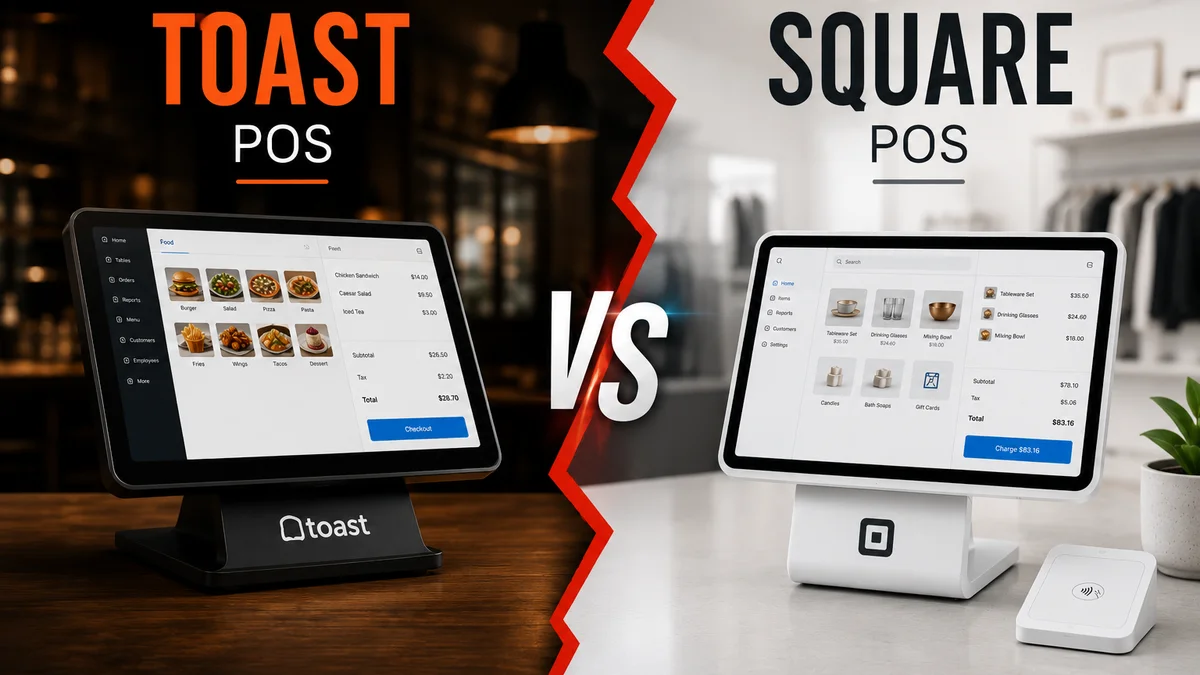
- POS integration. If orders don't flow into your POS, someone is retyping them during a rush. Check our best restaurant POS systems guide for which platforms integrate cleanly, and Toast vs Square if you're weighing the two biggest ecosystems.
How to price your own mix
- Pull three months of online sales, split into marketplace delivery, marketplace pickup, and direct.
- Multiply each bucket by its verified rate. Use the table above; use your actual plan tier, not the headline rate.
- Estimate the capturable share — repeat customers plus pickup. That, not total online sales, is the number to run against a flat-fee platform's break-even.
- Add processing to every direct scenario at your real published rate. A comparison without it is marketing, not math.
- Check the exit. Owner is explicitly month-to-month; ChowNow's cheapest pricing is annual. Term length decides what a mistake costs you.
Twenty minutes with a spreadsheet is worth five figures a year here. The platforms aren't hiding their rates — with two exceptions, they publish them plainly. They're betting you'll never multiply them by your own volume.
Fees verified August 4, 2026 from merchant pricing pages: DoorDash, DoorDash Online Ordering, Uber Eats, Owner, ChowNow, Square processing rates, Toast, TouchBistro. Grubhub's pricing page returned HTTP 403 to our fetches and is reported as unverified. Pricing changes; confirm with vendors before signing. RestroScout has no pay-to-play rankings — see our editorial policy.