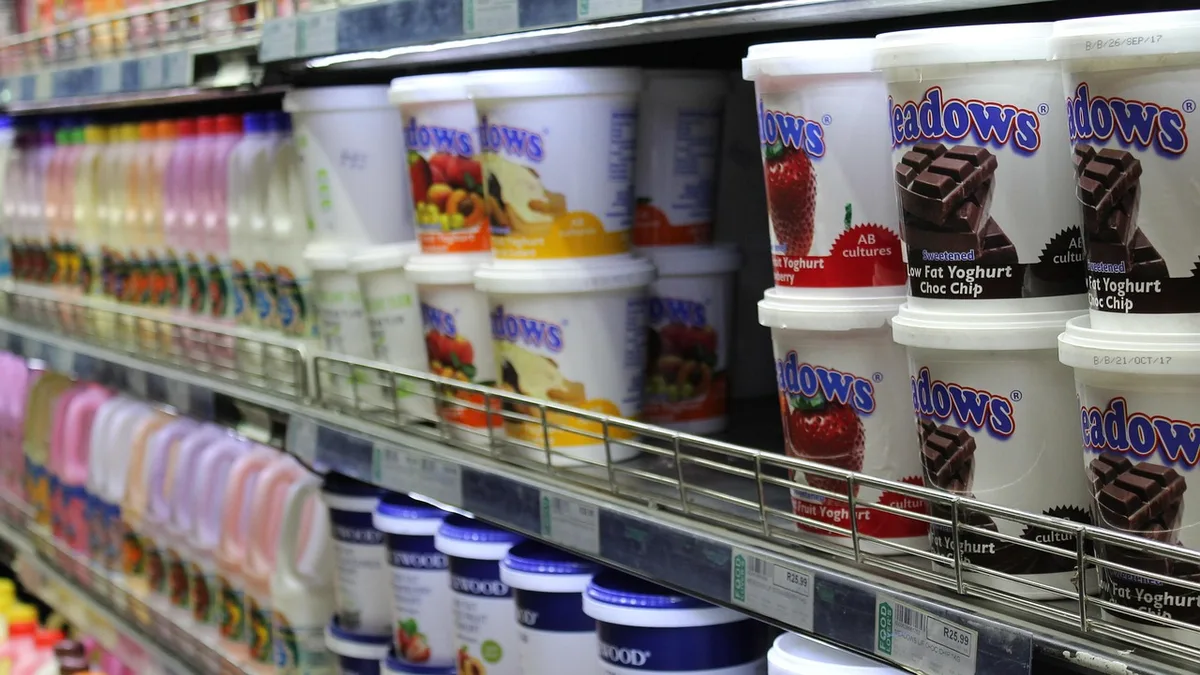
There is a strange moment in many restaurants that happens before the rush, before the first ticket fires, before the dining room starts filling.
Someone walks into the cooler, opens a few containers, squints at what is left, checks the walk-in, checks dry storage, maybe asks the line what they ran out of yesterday, and then starts writing a prep list on a piece of paper.
Not from a system. Not from sales history. Not from forecasted covers. Not from tomorrow's reservations. From memory, habit, anxiety, and a quick visual inspection.
In some kitchens, this takes ten minutes. In others, it takes forty-five. And by the time the list is finished, the restaurant has already made several financial decisions without realizing it: how much sauce to make, how many proteins to pull, how many vegetables to cut, how many desserts to prep, how much labor to spend before service, and how much food might end up in the bin two days later.
The prep list looks like a small operational task. In reality, it is one of the most important cost-control documents in the restaurant.
And in many restaurants, it is still being built like a guess.
The diary problem: "just glance in the cooler"
A restaurant operator once described a familiar problem: the prep list was being written on a blank sheet of notebook paper after someone glanced in the cooler. It took around 45 minutes to write, and the result was inconsistent. Some items were over-prepped and wasted. Other long-prep items were missed completely.
That one detail — "glanced in the cooler" — says a lot.
It means the prep system depends on whoever happens to be working that day. One sous chef might be conservative and prep light. Another might hate running out and prep too much. One line cook might notice the burger sauce is low; another might forget the pickled onions because the container was behind something else.
The problem is not laziness. It is not that chefs do not care. The problem is that the restaurant has never turned its prep routine into a measurable system.
So every day starts with a small negotiation between fear and waste. Prep too little and we run out. Prep too much and we throw food away. Prep the wrong thing and the line gets crushed. Prep everything "just in case," and food cost creeps up quietly.
This is the invisible daily pressure that restaurant software often fails to describe properly. Inventory is not just a monthly count, and it is not just a number in the back office. Inventory becomes real the moment someone decides what to prep today.
Why prep lists become expensive
A bad prep list does not usually destroy a restaurant in one dramatic moment. It leaks money slowly.
The first leak is over-prepping. Full containers and backup pans feel safe in the morning. But if demand does not arrive, that confidence turns into waste — cut herbs wilt, sauces expire, cooked proteins dry out, pre-cut vegetables lose quality, garnishes get tossed, bread goes stale, and seafood becomes a gamble.
The second leak is under-prepping. This one is louder because it happens during service. A station runs out of a key component, a cook stops to remake something, a manager has to 86 a menu item, the kitchen falls behind, guests wait, and reviews suffer.
The third leak is labor. A list written from scratch every morning costs time. If a chef spends 45 minutes building it and the team spends another hour fixing yesterday's mistakes, the restaurant is burning paid labor before revenue begins.
The fourth leak is ordering. Prep and ordering are connected. A restaurant that does not know what it actually uses orders emotionally — heavy after a bad weekend, light after a slow week — reacting to yesterday instead of planning for tomorrow.
That is how kitchens end up with too much of the wrong item and not enough of the right one. A reliable food cost and waste calculator turns those leaks into numbers you can actually see.
The hidden cause: restaurants confuse "inventory" with "counting"
Many restaurants say they "do inventory." What they usually mean is that they count things. Counting is useful, but counting alone does not solve the problem.
Counting once a month may help with accounting, but it does little for tomorrow's prep list. By the time the monthly count shows food cost is too high, the waste already happened.
The better question is not "How much inventory do we have?" It is:
Based on what we have, what we sold, what we wasted, and what we expect to sell next, what should we prep today?
That is a much harder question. It requires a connection between POS sales, menu mix, recipe ingredients, par levels, delivery days, prep shelf life, expected covers, waste logs, and actual on-hand inventory. Most independent restaurants do not have that connection, so they build the list from experience — and experience without data becomes inconsistent. Learning how to calculate food cost percentage is the first step toward replacing guesswork with numbers.
The par level trap
Many kitchens use par levels. In theory they are simple: keep enough of each item to cover expected demand, plus a reasonable safety buffer. In practice, par levels go stale.
A par created six months ago may not match today's menu, today's customer behavior, or today's delivery schedule. Maybe the restaurant added a popular dish. Maybe lunch got slower. Maybe delivery orders increased. Maybe a sauce that used to move fast is barely used now.
If pars are not updated, the kitchen starts prepping for a version of the restaurant that no longer exists.
This is one reason food cost can rise even when nobody feels like they are wasting much. The waste is spread across dozens of small decisions — a little too much prep here, a little too much ordering there, a few containers tossed at the end of the week, a few emergency purchases because something was missed. No single mistake looks huge.
Together, they become margin.
The emotional side of prep: nobody wants to run out
Restaurant people hate running out. It feels embarrassing, it creates pressure, and it forces servers to explain problems to guests. So kitchens overcorrect.
They prep extra because they remember the night they got destroyed. They order extra because they remember the weekend they ran out. They keep more backup than they need because the pain of a stockout is immediate, while the pain of waste is delayed.
Waste is quiet. Stockouts are loud.
A pan of unused prep in the trash at closing is disappointing, but it happens after the battle is over. Running out of a key item at 8:15 p.m. happens in front of everyone. So the kitchen protects itself from the loud problem by accepting the quiet one.
A good prep system has to respect that. It cannot simply tell chefs to "prep less." It has to give them enough confidence that prepping less will not ruin service.
What a better prep system looks like
A better prep routine does not have to start with expensive software. It can start with a better structure.
Separate prep items by shelf life. Some items are safe to batch because they hold well; others die quickly. A sauce that lasts five days is not the same as sliced avocado. Braised meat is not chopped herbs. Pickles are not cut fruit.
Track actual usage — not just what was ordered or counted. Actual usage means understanding how much of an ingredient disappears through sales, waste, staff meals, mistakes, over-portioning, and spoilage.
Write waste down every day. A waste log does not need to be complicated; it just needs to exist. If the same item appears three times in one week, that is not random — that is a signal. A simple inventory spreadsheet template is enough to start.
Connect the prep list to sales mix. If grilled chicken appears in five dishes, chicken prep should track the expected sales of those dishes, not a vague feeling that "we're low."
Create dynamic pars. Static pars beat nothing, but a Monday should not carry the same prep level as a Saturday, a rainy day may not behave like a sunny one, and a restaurant beside an event venue needs a different plan on concert nights.
The simple version: yesterday, today, tomorrow
If a restaurant has no system yet, the simplest daily model is this:
- Yesterday: What did we sell, waste, and run out of?
- Today: What do we have on hand right now?
- Tomorrow: What do we expect to sell before the next delivery or prep cycle?
That alone is a major upgrade from "glance in the cooler." A prep list should not be a blank page; it should be a living document that starts with yesterday's reality and today's expected demand.
For each prep item, the kitchen can ask:
- How much did we use yesterday, and how much did we waste?
- How much is on hand, and how long does this item take to prep?
- How long does it hold safely and at good quality?
- When is the next delivery, and what are today's expected covers?
- Is anything unusual today — weather, events, holidays, reservations, staffing?
This turns the prep list from a memory exercise into an operating system.
Where software can actually help
Software should not just count inventory. The valuable kind helps restaurants make better decisions. For prep planning, the useful features are recipe-level ingredient tracking, POS integration, waste logs, suggested par levels, low-stock alerts, prep forecasting, supplier ordering history, shelf-life tracking, variance reports, mobile counts, and daily prep templates. Our guide to the best restaurant inventory software compares the tools that do this well, and if you are not ready to pay yet, free restaurant inventory software is a reasonable place to begin.
But software only works if the workflow is honest:
- If cooks do not log waste, the system will not see waste.
- If recipes are wrong, ingredient usage will be wrong.
- If managers override suggested orders every day without recording why, the data stays messy.
- If the POS menu is not connected to recipes, sales never translate into prep needs.
That last point matters more than most operators expect: prep accuracy depends on a clean tie between your menu and your register, which is why your choice of restaurant POS system shapes how well any inventory tool can forecast prep.
The goal is not to replace kitchen judgment — it is to give kitchen judgment better information. A chef still knows things software does not: when a cook is slow, when a delivery looks weak, when a dish suddenly took off because a server started pushing it. But software remembers patterns humans forget. It can notice that the kitchen wastes the same garnish every Tuesday, that seafood prep spikes in warm weather, that a side sells more on delivery than dine-in, or that a prep item is always made one day too early.
That is the real value.
The RestroScout takeaway
The 45-minute prep list problem is not really about paper. Paper is just the symptom.
The deeper issue is that many restaurants still make daily production decisions without a reliable feedback loop. They sell food, buy food, prep food, waste food, and count food — but those actions live in separate silos.
The POS knows what sold. The walk-in knows what is left. The trash knows what was wasted. The chef knows what went wrong. The invoice knows what was bought. The prep list knows what the kitchen plans to do next.
When all of those things live in different places, the restaurant keeps guessing. That is why food cost can rise even when the team works hard, why operators feel confused when the numbers look bad, and why talented chefs still lose margin through prep. The answer is not to shame the kitchen. The answer is to make the invisible visible.
Start with the prep list. Turn it from a handwritten guess into a measurable routine: track what was prepped, used, wasted, and missed. Update pars weekly, not once a year. Connect prep to sales mix, not memory. Use software where it helps, but keep the kitchen's reality at the center.
Because a restaurant does not start losing money only when a guest complains or when the monthly P&L arrives. Sometimes it starts quietly, at 9:30 in the morning, when someone opens the cooler, looks around, and guesses what the day will need.