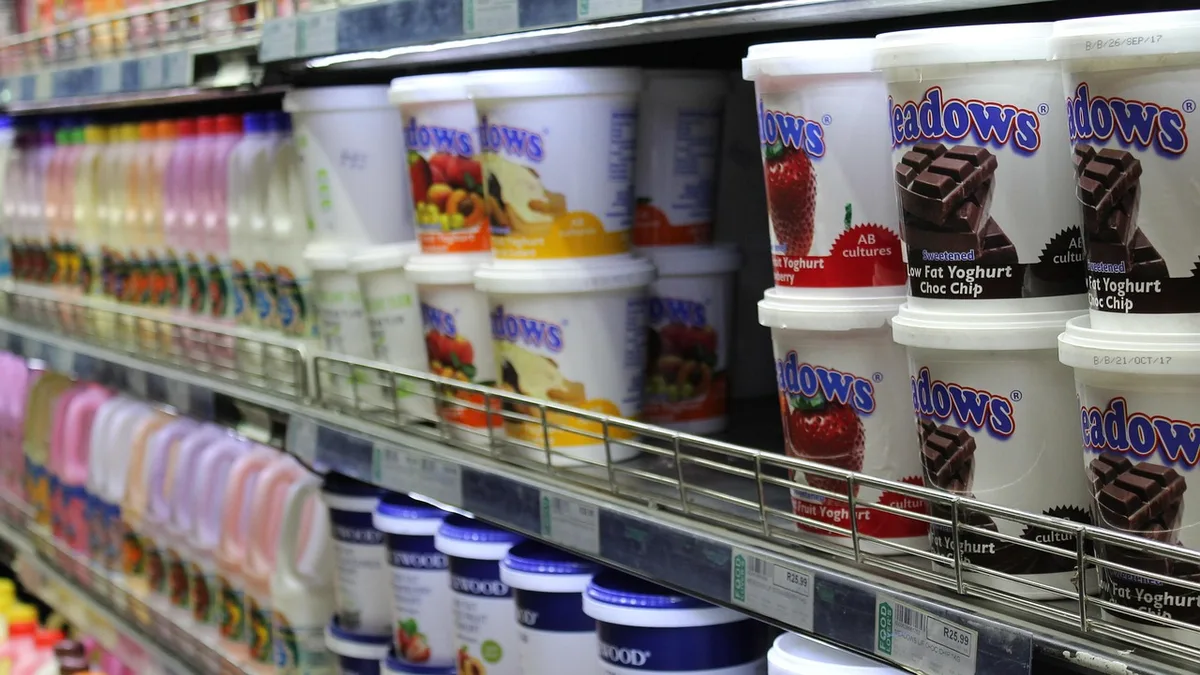
A restaurant owner stands in front of the walk-in at the start of the week. The shelves are full. The proteins are stacked, the produce looks fresh, the dry storage is organized, and the bar is stocked. By every visible measure, the restaurant is in good shape.
And yet, when the month closes, food cost is up again. Not by a dramatic amount — a point here, two points there — but enough to quietly erase the profit from a busy stretch. The owner did not feel wasteful. Nobody dropped a tray of steaks. There was no obvious disaster. So where did the money go?
This is the trap of the full walk-in. A cooler that looks full tells you that you have inventory. It does not tell you what that inventory is costing you, how fast it is moving, what is being wasted, or whether you ordered the right things in the first place. Those answers do not live on the shelf. They live in the gap between two counts.
A full walk-in is not the same as a healthy food cost. One is what you can see. The other is what you measure.
The most common inventory habit in independent restaurants is the monthly count: once a month, usually for the accountant, the team counts everything, plugs the number into a spreadsheet, and calculates food cost. It feels responsible. It is also, for the purpose of actually controlling cost, far too slow.
Counting everything once a month is an accounting routine pretending to be a cost-control routine. It satisfies the bookkeeper and the tax return. It does almost nothing for the decisions a kitchen makes every single day.
Monthly inventory tells you what happened too late
A monthly count is a snapshot taken thirty days after the decisions that mattered. By the time you finish counting and the food cost percentage lands in front of you, the month is already over. The over-ordering already happened. The spoilage already went in the bin. The supplier price creep already hit four weeks of invoices. The over-portioning on the line has been quietly happening for a month.
The number tells you that something went wrong. It does not tell you what, where, or when — because a single monthly figure averages thirty days of very different days into one blurry result. A great week and a leaking week cancel each other out on paper, so the real problem stays hidden inside the average.
Worse, a month is long enough that you cannot reconstruct the cause. Was it the new dish that portions heavy? The cook who is generous with the protein? The produce that spoiled during the slow midweek? The case of seafood that was short on delivery? After thirty days, nobody remembers. You are left with a bad number and no story to explain it, which usually leads to the least useful response of all: a vague instruction to "watch food cost," with no idea where to look. If you are still nailing down the math itself, start with how to calculate food cost percentage so the monthly number at least means something — then make it land sooner.
Weekly inventory shows what is happening now
Weekly inventory shrinks the feedback loop from thirty days to seven. That single change is the difference between an autopsy and a check-up.
When you count the high-impact items every week, a problem shows up while you can still do something about it. A spike in protein usage appears this week, not next month, so you can ask why this week — while the cook, the prep sheet, and the sales mix are all still fresh in everyone's memory. A produce category that is wasting money stands out against last week's number instead of disappearing into a thirty-day average.
Weekly counts also turn inventory into a trend instead of a single data point. One number tells you a little. Four numbers in a row tell you a direction. You start to see that seafood creeps up in warm weather, that a side dish wastes the same garnish every slow Tuesday, that dairy usage jumps whenever a particular special runs. None of that is visible monthly. All of it is obvious weekly. Pair the count with a quick pass through a food cost and waste calculator and the trend stops being a feeling and becomes a dollar figure you can act on.
Monthly inventory answers "what was our food cost?" Weekly inventory answers "what is happening right now, and what should we do about it?"
Which categories should restaurants count weekly?
The point of weekly counting is not to count everything more often. It is to count the items that can damage margin the fastest. Those tend to be expensive, perishable, fast-moving, or easy to lose track of. For most restaurants, that means:
- Meat. Usually the single largest line in food cost. Small changes in portioning, trim, or spoilage move the number quickly, and theft is not unheard of. Count it weekly, every week.
- Seafood. Expensive and unforgiving. It has a short shelf life, spoils fast, and is sensitive to delivery quality and warm weather. A weekly count catches problems before a whole case goes off.
- Dairy. Cheese, butter, cream, and milk move fast, expire quietly, and show up in more dishes than people realize. Dairy waste hides easily inside a full cooler.
- Produce. The classic source of invisible waste. It wilts, bruises, and gets over-prepped, and a single slow week can turn a healthy order into a bin full of money.
- Bakery. Bread and baked goods go stale on a daily clock. If you bake or buy fresh, weekly counts keep you honest about how much actually sells versus how much gets tossed.
- Alcohol, if relevant. For any restaurant with a bar, liquor and wine are high-value and notoriously prone to over-pouring, comps, and shrinkage. A weekly count on the bar is one of the highest-return habits there is.
These categories are where food cost is won or lost. Counting them weekly is not extra work for its own sake — it is putting your attention where the money actually moves.
What restaurants should not waste time counting weekly
The fastest way to kill a weekly inventory habit is to make it too big. If "weekly inventory" means counting every can, every spice, every paper good, and every shelf-stable backup, nobody will keep doing it for long. The labor will not be worth it, and the routine will quietly die after a few weeks.
So do not count the slow, cheap, and stable items weekly. Dry goods like canned tomatoes, rice, pasta, flour, and sugar move slowly and rarely spoil. Shelf-stable backups, oils, condiments in bulk, and non-perishable staples do not swing your food cost from week to week. Paper goods, cleaning supplies, and packaging belong in their own ordering rhythm, not in your weekly food count at all.
These items are fine to count monthly, alongside your full accounting count. They are cheap to slightly over-order and they do not rot, so a weekly count of them costs labor without changing a single decision. A weekly count earns its keep only when it is focused on the categories that actually move margin — keep the list short enough that the team will run it every week without resentment.
How weekly counts reduce over-ordering
Over-ordering is mostly a fear problem. Kitchens order heavy because running out during service is loud and embarrassing, while waste is quiet and arrives later. Without recent data, that fear wins every order, and the safest-feeling choice is always "get a little extra."
Weekly counts replace the fear with a number. When you know what you actually used over the last seven days, you can order to a realistic par instead of to an anxious guess. You stop ordering for the weekend you remember getting crushed and start ordering for the weekend the data actually predicts. The buffer shrinks because you no longer need a large safety margin to cover for not knowing.
That has a direct cash effect. Less over-ordering means less money tied up on the shelf, fewer items reaching their expiry before they sell, and fewer "where did this come from?" cases buried in the back of the walk-in. A short weekly count, checked against a simple restaurant inventory spreadsheet template with par levels built in, is usually enough to take the emotion out of ordering and replace it with a routine.
How weekly counts expose waste, theft, spoilage, and supplier issues
The real power of a weekly count is variance — the gap between what should be left and what actually is. If you know what you started with, what you bought, and what you sold, you can estimate what should remain. When the real count does not match, the difference has a cause, and weekly timing makes that cause findable.
That gap is where the quiet leaks live:
- Waste shows up as usage that sales cannot explain. If you used far more of an item than you sold, something is going in the bin.
- Theft and shrinkage appear the same way, especially on high-value categories like meat and alcohol, where a weekly variance is far easier to investigate than a monthly one.
- Spoilage surfaces when perishable categories run high week after week despite steady sales — a sign that you are ordering past what the kitchen can actually move.
- Supplier issues become visible too: a delivery that was short, a unit price that crept up, or a substitution that changed your cost without anyone noticing on a busy receiving morning.
A monthly count blends all of these into one number you cannot act on. A weekly count keeps each leak small, recent, and traceable — close enough to the event that someone still remembers what happened and can fix it.
A simple weekly inventory workflow
A weekly inventory routine only works if it is small, consistent, and boring. The goal is something the team can run in well under an hour, the same way, every week. A workable version looks like this:
- Same day, same time. Pick a fixed slot — often before a delivery or at the end of a week — and never move it. Consistency is what makes the numbers comparable.
- Count the short list. Stick to the high-impact categories: meat, seafood, dairy, produce, bakery, and alcohol if you have a bar. Leave the dry goods for the monthly count.
- Count in the same order every time. Walk the walk-in, the line, and the bar in a fixed path so nothing gets missed and the count goes faster each week.
- Record it the same way. Use one sheet or one screen, with the same units every week, so this week can be compared to last week without translation.
- Compare three things. This week's count versus last week's, and both against what you actually sold. The gaps are your signal.
- Act on one thing. Pick the single biggest variance and ask why before the next order. One fix a week compounds fast.
This is the same discipline that turns a prep list from a daily guess into a measurable routine: a fixed structure, honest numbers, and a short feedback loop. You do not need software to start. You need a sheet, a set time, and the willingness to look at the gaps.
When to move from a spreadsheet to inventory software
A spreadsheet is the right place to begin. It is free, flexible, and forces you to learn what actually matters before you pay for anything. Many restaurants run a solid weekly count on a spreadsheet for years and control food cost just fine. If you are not counting weekly yet, do not buy software — build the habit first.
The signs that you have outgrown the spreadsheet are usually practical, not aspirational. You feel the pull toward software when recipe-level costing becomes too tedious to maintain by hand, when you want usage to flow automatically from your POS sales instead of being typed in, when variance tracking across dozens of items eats more time than it saves, when you run more than one location and the spreadsheets stop reconciling, or when the manual work has become the reason the weekly count keeps slipping.
At that point, software pays for itself by removing labor and tightening the loop further — connecting sales to recipes to counts so variance is calculated for you. Our guide to the best restaurant inventory software compares the tools that do this well, and if you are not ready to pay yet, free restaurant inventory software is a reasonable next step up from a spreadsheet. But the order matters: the habit comes first, the tool second. Software multiplies a good weekly routine. It cannot create one.
A restaurant does not need to count everything every week. It needs to count the items that can damage margin fastest — meat, seafood, dairy, produce, bakery, and the bar — and leave the cheap, stable goods for the monthly accounting count. Monthly inventory tells you what already happened. Weekly inventory tells you what is happening now, while you can still change it. Start with a short weekly count on a spreadsheet, act on the biggest variance each week, and only reach for software once the habit is real.